
Callan Method
Callan Method: Learn to speak English in three steps
The Callan Method is a language teaching method based on three principles that make it the fastest, easiest and most enjoyable way to learn to speak English or Spanish.
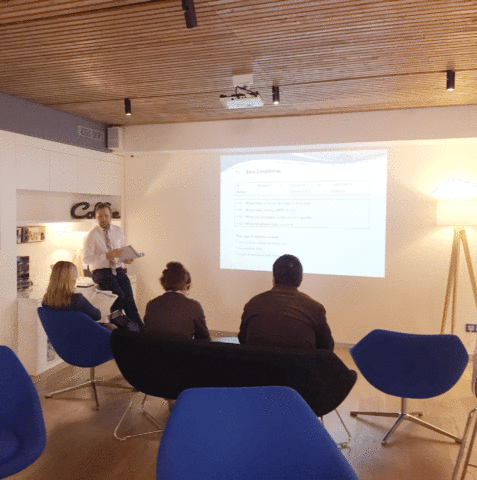
Based on three teaching pillars: Listening and speaking. Reviewing and assimilating. Reading and writing. The Callan Method is taught in small groups (up to 10 students) where the teacher speaks and constantly asks each student questions, so that through repetition and correction they gradually absorb the language naturally.
In class, there’s no time to think and you start speaking almost without realising it, because everyone takes part from minute one until the end of the lesson.
-
 Total immersion
-
 Practical approach
-
 Native teachers
-
 Fast-paced classes
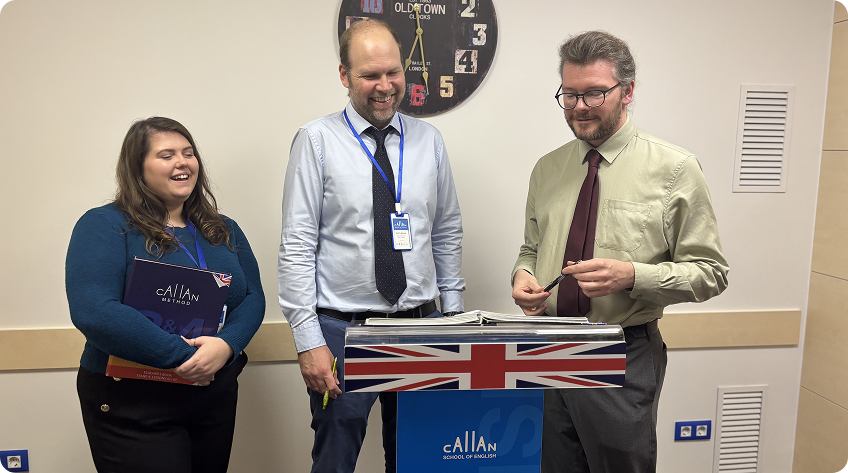
How it works
Created in 1959 by Robin Callan, the Callan Method has revolutionised the English learning system and is now used in more than 40 countries around the world.
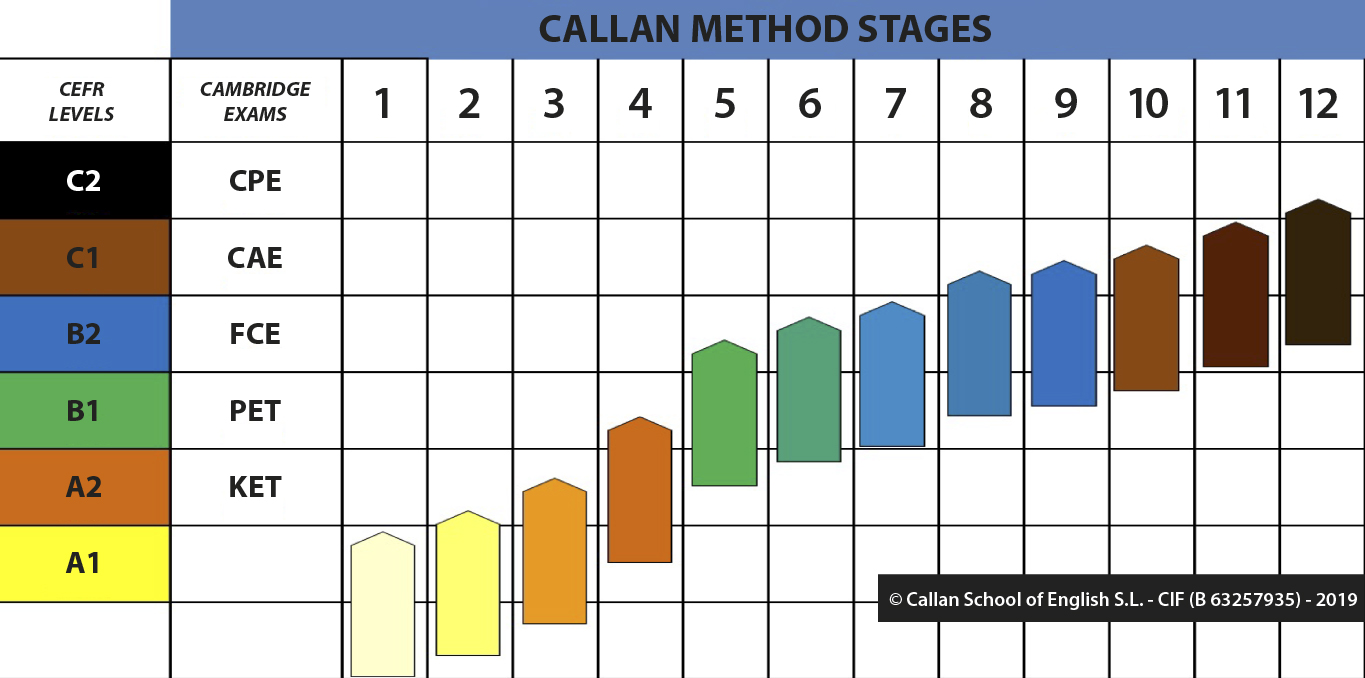
The Callan Method is divided into 12 basic levels, plus 7 advanced levels. We explain them here:
Callan Method levels and CEFR equivalence
As a conversational English teaching method structured in three steps, this system allows students to make the most of every minute in class and develop their skills at great speed.
The effectiveness of the Callan Method is mainly based on two factors:
- Practical approach, because to master a language it’s essential to practise it.
- Fast-paced classes, designed to help students break the habit of translating mentally, gain speed in listening comprehension, and stay fully focused throughout the lesson.
Callan Method
Thanks to its agility, practical approach, and the way this system indirectly trains students’ memory, the knowledge acquired in the 12 levels of the Callan Method is retained more effectively than with other teaching methods (based on memorization), making it much harder to forget. In each of the three steps this method is divided into, different skills are worked on to learn English or Spanish in less time. Do you want to learn more about them?
Listen and Speak
You will never be silent doing reading comprehension tests or grammar exercisesReview and Assimilate
You speak English continuously, and we correct all your mistakesLearn to Read and Write
You learn very quickly; each Callan class is a total immersion in the languageThe four pillars of each Callan lesson
As a conversational method designed to get students to speak in English from day one, the teacher-student dialogue is based on guided question-and-answer conversation. This pattern gradually allows more freedom of response as students expand their vocabulary and work on grammar.
Everything that is learned is reviewed regularly until students use the acquired knowledge spontaneously. This makes it easier and easier to answer, and sentence building becomes very natural.
Students can now read the words they have learned and used in class naturally, without the risk of getting pronunciation wrong. Through guided reading aloud, phonetics and intonation are practised and corrected, always under the teacher’s supervision.
Once students work on and improve recognition of written text, they achieve faster reading speed.
This focuses on the vocabulary studied previously, practising written English once it has been recognised and used orally.
Students practise writing through this short dictation, training spoken English comprehension without the support of the book. With different teachers, they also get used to hearing different accents and intonations.
When introducing new concepts, the teacher, always in English, starts with pronunciation, explains the meaning and usage, and then puts them into the context of the questions, making both the phonetics and the different meanings of the terms clear.
In this way, words are learned without translating or writing them down, which reduces confusion with similar terms in the student’s language and helps with correct pronunciation.
Thank you for being part of our journey
The trust our students place in us, combined with years of dedication and hard work, has helped our small English academy grow into the thriving Callan School Barcelona community it is today.
Our growing family now includes more teachers, more classrooms, and a wider choice of class schedules, allowing us to offer an even better learning experience and all the resources you need to achieve your English language goals.
Callan Method levels
The Callan Method has 19 levels, from “beginner” to “advanced”. In this table you can see what you will learn at each level of the method, as well as a comparison of each level with the CEFR levels (Common European Framework of Reference for Languages).
Students start learning English from the ground up with simple sentences. Teachers begin by practising basic sentence structures with the student, including interrogative sentences, the most common contractions and subject pronouns. They become familiar with essential basic verbs such as “to be” and “to have”. Vocabulary includes numbers, letters, the most common prepositions, nationalities, possessive adjectives and pronouns.
Result. Students learn how to introduce themselves and describe everyday actions in their environment.
Students learn several verb tenses, learning to distinguish between “present simple” and “present continuous”. Students are introduced to countable and uncountable nouns: “many”, “much”, “few”, “little”. Comparative forms “more than”, “fewer than”, “less than”, and superlatives “the most”, “the fewest” and “the least”. Teachers explain and demonstrate which nouns are countable and which are uncountable. Students practise the indefinite pronouns “somebody”, “anybody”, “nobody”. They also learn the days of the week, family members and how to tell the time.
Result. As a result, students can distinguish between actions happening now and actions that happen habitually. They also learn how to express possession and quantity.
Communicates using single words and with a great deal of difficulty in very simple contexts. Does not know basic grammatical structure and therefore cannot perform any professional role that requires use of the language.
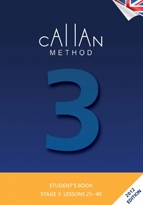
Students are taught to distinguish adjectives of more than one syllable in their comparative and superlative forms, learning the grammatical rules that determine them. They learn the comparative of equality, adverbs of frequency such as “sometimes” or “never”, regular past tenses in positive, negative and interrogative forms. They internalise the months of the year, advanced prepositions such as “below”, “beside” or “along” and the difference between “over” and “on”. At this stage, students gain confidence and security using present tenses before increasing the level with past and future tenses.
Result. Students learn to define different characteristics of an object and communicate how an action happens. They also learn to form sentences in the past.
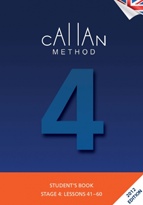
Students learn and practise past tenses of the most common irregular verbs (“speak”, “leave”, “come” and “go”) and the most frequent uses of the verb “get” in “present simple” and “present continuous”. They practise the adverb “away” and the verbal construction “to be worth”. They are introduced to future tenses with their grammatical structures and contractions. They also learn the differences in the use of “shall” and “will” in interrogative forms. The use of contractions with names and pronouns and the sound of contractions. The different forms of “to have” are also explained. The meaning and construction of “succeed in doing something” and “fail to do something” are introduced. Differences between “must not” and “do not have to” are also included in the syllabus. Students learn how to form nouns from verbs using the suffix “-er” (example: “worker”) and the rules for regular and irregular verbs. The three uses of the “present perfect”, and the difference between “present perfect” and “past continuous”. They learn the pronoun “one” as a way to refer to the concept of people in general. Future actions are explained, as well as the particularities of “he has been” and “he has gone”. Students learn the use of the word “whether” and the word “just” to refer to an action that has just been done. Finally, students learn the 1st and 2nd conditional.
Result. Students learn to talk about the future, and actions that have been happening up to now. They communicate intentions, possibilities and assumptions.
Understands simple sentences and questions. Manages to communicate their wishes and give basic information. Is able to read and write sentences using basic structures. Begins to understand with help.
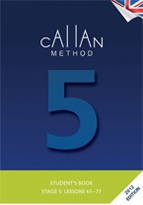
Begins with the use of the “modal verb” “should” and the differences between “still” and “yet”, in relation to “for” and “since”. The use of “could” in past and conditional tenses of “can” and “be able”, and the two forms of “to be” in sentences with the second conditional. Contractions of conditional tenses are also introduced. Students learn sentence construction with “make somebody do” and other contractions of “to be”. Introduction to the past continuous and use of passive tenses in present, past and future. Knowledge of reflexive pronouns and the expression “I would say”. Common “phrasal verbs” with the adverb “back” are practised. Analysis and difference between “past perfect” and “past simple”, as well as “future continuous” and use of the verbs “let” and “allow”. Finally, students learn to express hypothetical or imaginary situations through mastery of the third conditional.
Result. Students can express situations that occurred at a specific moment in the past and actions that affect the subject as opposed to the object. They learn to express a sequence of actions in the past and communicate past assumptions.
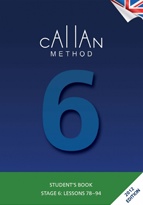
Students learn the difference between “will” and “be going to” in reference to future events. Control of the emphatic use of “to do” in positive sentences to contradict something you have said. The most common uses of “fair” and the differences between the prepositions “in” and “within” in time expressions. The “future perfect”, referring to actions that will happen at a specific moment in the future. Students also learn to use short phrases with auxiliary verbs and the two ways of reporting what someone has said: direct and indirect style, as well as “reported speech”. The indefinite pronouns “whatever”, “whenever”, “whoever” are mastered. Students learn how to use and recognise verbs formed from one-syllable adjectives by adding the suffix “-en”, as well as the “modal verb” “ought” as an alternative to “should”. Four different ways to make a suggestion and use of the prefix “over-” added to verbs. Introduction to the “present perfect continuous” to refer to the duration of an action and use of “tag questions”. The differences between “to tell” and “to say”, auxiliary modal verbs and the expression “by the time”.
Result. Students are able to convey information from other people, can communicate the causes of an action as well as its duration in present, past and future sentences.
Understands a native speaker talking about general topics and expresses themselves at a basic level in everyday situations. Understands and can generally read simple texts.
Learning to use the suffix “-ed” in regular past verbs, and the “present continuous” for future sentences. Possessives for ownership (I’am going john’s house), “main clauses” vs “dependent clauses” (e.g. “If I don’t sleep enough, I feel tired”); Verb + Object + Adjective (e.g. “Milk will make you strong”). Students are introduced to “Relative Clauses” and adverbs of frequency, as well as indirect speech with questions, exclamations and requests. Time and conditional sentences emphasising pronouns (e.g. “He wrote the story himself”). “Defining” and “non definning” “relative clauses” as well as common expressions.
Result. Students learn countless common phrases and “phrasal verbs”. At this point, students understand a native English speaker talking normally, making a long conversation possible.
Students learn plural nouns ending with the suffix “-F” or “-EF”, the “present simple” for future sentences (e.g. “The film starts at 10 p.m.”), relative clauses with “who”, “whom”, “whose”. Transitive and intransitive verbs are learned, as well as words with no plural used as nouns in a general sense. Definite and indefinite articles, the use of “a” and “an”. “to be” + infinitive with “to” (e.g. “The President is to meet the Queen.”). “Could” as the past of “can”, “should” and “ought to” for past and future forms (e.g. “I should have done my homework last night” / “She ought to tell him about the mistake next week”). Making requests, “need” as a modal verb (e.g. “Need he come to work next Saturday?”). Differences between “used to” and “get used to”, “so” and its multiple uses. Future formulas (e.g. “When I eat dinner, I will watch TV”), common expressions such as “due to” or phrases like “hit the nail”.
Result. Students have an excellent command of idioms and can express complex ideas and concepts. They can subtly express abilities or needs, as well as understand texts specific to a subject area.
Understands a native speaker who speaks normally in a familiar context and is able to maintain a relaxed conversation. Can talk with a colleague, understands texts on familiar matters and can write simple texts.
Understanding and practice of comparative and superlative adjectives, participles and adverbs. The use of nouns as adjectives (e.g. “train station”); Verb + infinitive or gerund. Compound adjectives formed by adverbs or adjectives and participles (e.g. “beautifully-designed” / “slow-moving”). Compound adjectives formed by an adjective and a noun with the ending suffix “-ed” (“blue-eyed”) or doubling consonants (e.g. “big – bigger”). Unfinished phrases ending in “-to”. “the” + adjective = noun. The use of “to wish”. Giving and asking for opinions, changing “y” to “i”. “Present Perfect Continuous” expressing conclusions from a recent action (e.g. “Look at Lucy’s eyes: I think she has been crying.”). the use of “was” + infinitive with “to” (e.g. “I did not know when I met her that she was to bring about our destruction”). Questions without the “question form” (e.g. “What does a sheep give us?”). “the” + “comparative” (e.g. “the sooner we get the job finished, the better”). The use of the suffix “-ish”, as well as “some” in questions. Double contractions (e.g. “I’d’ve done it”). The two meanings of “quite”. Emphasis, pronunciation and stressed syllables. The use of the passive voice (e.g. “My carhas been stolen!”). the multiple uses of “by”, as well as the possessive apostrophe. Many useful and common expressions (e.g. “get you down”) together with sets of exercises.
Result. Extensive knowledge of colloquial expressions that allow students to maintain a fluent dialogue. Use and understanding of language to express complex ideas. Students can function in a professional environment and in a work context that requires command of the language.
Students master the use of auxiliary modal verbs to express probability (e.g. “I may buy some new clothes next weekend”). “will” and “would” for habits. Advanced uses of “by” (e.g. “They were walking by the river” / We cooked the meat by roasting it”). Adjective + infinitive with “to” (e.g. “She was sad to say goodbye to her friends”). The expression “it´s time” (e.g. “It’s nine o’clock; it’s time for the children to go to bed”). Common uses of the gerund (e.g. “Jogging keeps me fit”). “any” and “some” with singular countable nouns. Differences with comparatives. Mixed conditionals (e.g. “If I had gone to bed earlier yesterday, I would feel better now”). The expression “it is – since” (e.g. “It’s six month since she gave up smoking”). Communicating general beliefs and opinions, as well as many useful expressions and phrases in spoken language. (e.g. “make the most of” – “If you go to London to learn English, you should make the most of your time there by speaking the language as often as possible.”).
Result. Students have a much wider range of resources and can express themselves precisely and clearly. They can describe different levels of probability and qualify possible causes and consequences. They master everyday tasks such as making calls, translating documents or writing letters.
Survives in a professional context abroad, being able to communicate their ideas and opinions and understand a group of interlocutors. Can make phone calls, translate documents and write letters.
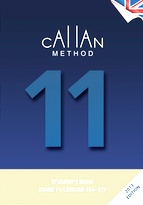
Students learn general rules for writing letters. Inversions after adverbs of negation or limitation (e.g. “Never have I met such a rude man”). Common prefixes and mastery of the informal letter as well as writing an email or a “cover letter”. Common verb suffixes (e.g. “identify” / “notify”) as well as writing a report. Advanced “phrasal verbs” (e.g. “When an event I’ve been looking forward to is called off, I feel disappointed” / “I have never got along with my sister-in-law). Useful sentence structures. (e.g. “on a … basis” – “Most magazines produce new issues on a monthly basis.”). Students improve their English with “word pools” and exercises.
Result. Students learn to express themselves clearly and understand high-level and subtle language, both spoken and written. Students can now understand language in any context and take part in group discussions. They can participate in meetings and make oral presentations.
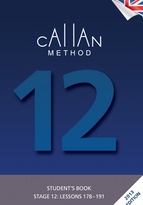
Students learn general rules for writing letters. Inversions after adverbs of negation or limitation (e.g. “Never have I met such a rude man”). Common prefixes and mastery of the informal letter as well as writing an email or a “cover letter”. Common verb suffixes (e.g. “identify” / “notify”) as well as writing a report. Advanced “phrasal verbs” (e.g. “When an event I’ve been looking forward to is called off, I feel disappointed” / “I have never got along with my sister-in-law). Useful sentence structures. (e.g. “on a … basis” – “Most magazines produce new issues on a monthly basis.”). Students improve their English with “word pools“ and exercises.
Result. Students manage to express themselves clearly and understand high-level English, as well as understand subtle nuances of language, both written and spoken. They can understand the language in any field or sector and take part in discussion forums. They can participate in meetings and give lectures.
Understands in any context and takes part in group conversations. They can participate in meetings and give oral presentations. Can take notes and write reports. Can work abroad.
Teachers introduce, demonstrate and define key business terms, using question-answer work to help students to take in and retain new concepts and structures. There are also revision exercises to help students practise what they have learned and homework titles to practise different types of business writing.
Students learn how to Write A Business Letter Or Email; Present Data In Graphic Form; Write an Informal Letter or Email; and Write a Cover Letter. In the vicinity of 700 items of lexis, including expressions and collocations, are introduced. Avoiding voguish buzzwords, Callan for Business focusses on the English structures and vocabulary students will actually encounter and require in various related business fields.
Result. Students can adapt themselves to English-speaking workplaces. They can now understand vocabulary in business contexts and take part in financial and commercial discourse. They can participate in business meetings and make sector-related presentations.
Further advanced levels
Students study English idiomatic language in detail, with focus on the structure of sentences in which the language will be used and contrasts between different idioms with a similar or related use. Students learn idioms such as: to go off (e.g. «This milk smells like it has gone off» / «My alarm clock went off an hour earlier than it was supposed to this morning»); to come/go over (e.g. «Would you like to come over tomorrow, as you’ve got the day off?» / «I don’t know what came over me»); to turn up (e.g. «What’s the point of turning up the radio? – you’re not listening to it anyway » / «I’m sorry I didn’t turn up yesterday but I had to go over to my brother’s»); to go on («Please go on with what you were saying» / «Unfortunately, he was reluctant to tell us what was going on»); to work out («You’d better work out exactly how much you are overdrawn by» / «They went out together for a while, but unfortunately it didn’t work out»); to turn out («I thought that going into business with them would be wonderful but it turned out to be a dreadful idea» / «Her publishing company turns out up to a thousand books a week») and to put off («The match has been put off until next Thursday because of the appalling weather» / «I wish they’d turn their music down; it’s putting me off my work»).
Result. Students expand use and command of complicated and colloquial registers. By this stage, students will find themselves expressing themselves with ease at the same level as a native English speaker. Students now know how to take notes, and write in-depth reports and summaries. Can work abroad effectively.
Students study English idiomatic language in detail, with focus on the structure of sentences in which the language will be used and contrasts between different idioms with a similar or related use. Students learn idioms such as: to make out («I can’t make out why he keeps putting off the wedding» / «He makes out that he’s poor but actually he’s quite well-off»); to make up («Don’t try it on with me! I know you’re just making it up!» / «Last night they were having a terrible go at each other, but I gather that they’ve made up this morning»); to pick up («I’ll be round to pick you up at 9 o’clock» / «When I was over in China last year, I managed to pick up a little Cantonese»); to get over («There’s nothing that can make up for the loss of her husband – she’ll never get over his death» / «We got over the problem of sacking him by encouraging him to give in his notice instead»); to take up («I’d like to take up swimming when the children break up» / «He has applied to take up residence in Switzerland, but they are bound to turn him down»); odd («I don’t know why we took on such an odd character» / «The row of houses on this side of the road have all got odd numbers»); to come up («I’m off to lunch. If anything comes up, you can call me on my mobile phone» / «Did anything interesting come up at the meeting this morning?»); to mess around/about («I fancy spending this weekend just messing about at home» / «Please stop messing around with my camera; I know how clumsy you are»); to get off («It’s a good thing we’re getting off at the next stop ― I could murder a cold drink» / «Can you have a go at getting this lid off? It’s impossible!»); to go through («They went through an awful time last year when the Home Office started to crack down on illegal immigrants» / «Even though I can get by in English, it takes me ages to go through a newspaper»); to see out/through («My business course is not what it’s cracked up to be but, as there is only one month to go, I may as well see it out/through» / «You can try to talk them into doing it your dishonest way, but they are bound to see through it in the end»); and to get through («Yesterday, I made up my mind to call John but I couldn’t get through to him» / «I don’t know how I got through last week: I felt all the odds were against me»).
Result. Students can understand a wide range of demanding, longer English texts, and recognise implicit meaning. Can express him/herself fluently and spontaneously without much obvious searching for expressions.
Students study English idiomatic language in detail, with focus on the structure of sentences in which the language will be used and contrasts between different idioms with a similar or related use. Students learn idioms such as: to wind up («It must be quite a while since we last wound the clock up» / «As we’ve got through practically everything we intended to discuss, we might as well wind up the meeting») and to turn on («I nearly hit the roof when you turned on the light last night: didn’t you know the children were asleep?» / «It was appallingly ruthless of the Army to turn on its own people»); to put down («I didn’t mean to put you down the other day: it was just the way it came over» / «If you put down what I’ve just said, you won’t have to go over it again tomorrow»); to come off («No wonder the door handle came off – you kept messing around with it» / «Don’t take it for granted that the scheme will come off – we’ll have to talk many people into going along with it»); to get round («We’ll have to start from scratch, unless you find a way of getting round the problem» / «News soon got round that the Prime Minister had fallen out with the rest of the cabinet»); to put on («I can’t get over how much weight she has put on since her marriage broke up» / «Can you put that Brazilian song on again? I’ve really taken to Samba») and to get at («I’m not trying to get at you in particular; what I’ve said goes for all those who were involved» / «I don’t know what you’re getting at, but I’d prefer you to be blunt and tell me what you really mean.»)
Result. Students can use language flexibly and effectively for social, academic and professional purposes. Can produce clear, well-structured, detailed text on complex subjects, showing controlled use of organisational patterns, connectors and cohesive devices.
Students study English idiomatic language in detail, with focus on the structure of sentences in which the language will be used and contrasts between different idioms with a similar or related use. Students learn idioms such as: to lay out («If you lay everything out on the table, it will be easier to sort out which papers are worth keeping» / «The garden is clearly laid out in my mind»); to come through («We had to put up with a lot of hardships during our time in the Army but we all came through it in the end» / «What came through most of all was his reluctance to come to terms with the truth»); to go round («I don’t really go around with my college friends any more. We’ve drifted apart in recent years» / «The stories that went round about these two were a real eye-opener»); to get going («Let’s get this meeting going before we wind up having to spend the night here» / «It’s so easy to get your brother going; I never knew he was so touchy»); to draw out («If you run short of ideas you can always draw out the seminar by bogging the audience down with some statistics» / «It doesn’t matter how much they try it on, they’ll never draw a word out of her»); to draw in («Don’t draw me into your rows!» / «As the train drew into the station I tried to wipe out the memory of the last time she turned up out of the blue») and to write off («I can’t get over how we managed to break even, considering how many debts we had to write off» / «At school he was written off as a borderline case. No one knew he had it in him to stand out as a brilliant politician»).
Result. Students can understand with ease virtually everything heard or read. Can summarise information from different spoken and written sources of English language, reconstructing arguments and accounts in a coherent presentation.
Students study English idiomatic language in detail, with focus on the structure of sentences in which the language will be used and contrasts between different idioms with a similar or related use. Students learn idioms such as: to head off («I must be heading off. I’ve got to go round to Peter’s this evening» / «The police were a bit slapdash in trying to head off the protesters»); to make a comeback («It was a foregone conclusion that he wouldn’t be able to make a comeback» / «I thought the Fiat Uno might have made a comeback but sales are dwindling»); to alienate («As time goes by the government are increasingly alienating the voters» / «He could never appreciate the hardships his parents went through in bringing him up»); pushover («She may be down to earth, but by no stretch of the imagination is she a pushover» / «He’s sulking because he thought his dad would be a pushover when it came to lending him his car; he turned out to be very mistaken»); to shift («The date of the meeting has shifted to Tuesday» / «This detergent will stand you in good stead for the future; it shifts stains without a fuss»); to build up («A massive backlog of claims has built up over the Christmas period» / «In the aftermath of the war, the press built him up to be a hero but in reality he was very adept at turning everything to his advantage») and jaded («I’m feeling jaded and in need of a rest»).
Result. Students can express themselves spontaneously, very fluently and precisely, differentiating finer shades of meaning even in the most complex situations. Students are capable of smoothly expressing themselves in written or oral form.
Students study English idiomatic language in detail, with focus on the structure of sentences in which the language will be used and contrasts between different idioms with a similar or related use. Students learn idioms such as: done and dusted («The deal is done and dusted at last. I’m so happy about that. It seemed we were just plodding on, getting nowhere»); in the wake of («There are many things that we cannot afford to overlook in the wake of the farce which went on in the boardroom last Friday»); to fob off («When he asked the minister if the law was likely to be implemented during this parliament, he was fobbed off with fake assurances»); to do oneself down («Don’t do yourself down all the time. You shouldn’t be so easily deterred from having high aspirations»); to rope someone in/into («He started attending discussion groups after work, and tried to rope me in; but I don’t fancy getting involved in all that palaver»); knee-jerk («It all sounds perfectly plausible to me at this early stage, but I don’t want to come out with some knee-jerk response that I will live to regret later on»); to set in («The cold weather has unfortunately taken its toll on the old people of the village. Winter is definitely setting in.»); to pull one’s weight («It certainly sparked debate when he accused some of the staff of not pulling their weight») and heads will/would roll («I think if they hadn’t clinched that agreement, heads would have begun to roll»).
Result. Students can articulate themselves spontaneously with facility and exactitude and also make finer subtleties of meaning distinct in more discursive contexts. Both students’ spoken and written English is almost equivalent to well-educated native level.
Students study English idiomatic language in detail, with focus on the structure of sentences in which the language will be used and contrasts between different idioms with a similar or related use. Students learn idioms such as: to pan out (“I’m not sure how it’s all going to pan out. The problem you mention is just the tip of the iceberg. I suppose we should count our blessings and not get too worked up about it”); to fend for (“I think the penny has finally dropped. His parents are feeling the pinch and at 27 years old he will have to fend for himself.”); entrenched (“He is very set in his ways and his entrenched views on the role of women in society fly in the face of modern thinking”); watershed (“I have been left somewhat bereft of hope. I had a hunch that the meeting was going to mark a watershed in our negotiations with the bank.” / “The BBC will tarnish its spotless reputation if it puts on this film before the watershed”); to milk it/this (“He has never won Wimbledon before, so you can’t blame him for milking it”); to delve into (“If you delve into his past, you will see that whenever he has been given free rein to work without restrictions, he has wreaked havoc.”); whitewash (“Many commentators believe that the enquiry into the legality of the Iraq war was a whitewash, and that the former Prime Minister should bear the brunt of public outrage”); to mull over (“I’ll mull over what you have suggested during the weekend, and I promise I will not duck any issues when I come back to you on Monday”) and knock-on effect (“Teachers often claim they are vilified by parents and in the right-wing press, but what many of them don’t realise is that poor teaching has knock-on effects for children in their future lives”).
Result. Students can follow with ease nearly everything they read or hear. They are able to condense information from different oral and written discourse, recreating discussions and reports into a logical delivery.
7 frequently asked questions about the Callan Method for learning English
The Callan Method has become famous because it allows you to speak and understand English very quickly, which is what most people want when they decide to study a language: to gain fluency.
Before you start, you take a level test to place you in the appropriate class. There are up to 12 levels or stages of learning in the Callan Method. At the end of each level, you take a level test or exam to ensure you have mastered the material learned.
See Callan Method Levels and CEFR equivalence
This teaching method is used successfully in more than 40 countries and helps thousands of people learn English and Spanish quickly and efficiently every day in authorized language schools, such as Callan School in Barcelona.
In each class, you learn new grammar and vocabulary. You practice using it, and everything is reviewed systematically so you remember what you have learned.
If you have to take any English exam such as Cambridge (A2 Key, B1 Preliminary, B2 First, IELTS, TOEIC or TOEFL) or Trinity, the Callan Method is the fastest way to acquire the language skills you need to speak fluently and confidently to pass these tests.
The content of the Callan Method general English courses has been decided taking into account the CEFR (Common European Framework of Reference) and popular international English exams.
The Callan method works very well for most people at any English level, although, as it’s a learning system different from the norm, it might take some getting used to. But if you give it a little time, you’ll get hooked and learn English very quickly without realizing it.
Unlike other language teaching methods, in this method
- The teacher speaks quickly so that you learn to understand spoken English at a normal speed.
- The teacher constantly asks each student questions so they listen and use English to the fullest.
- When you speak, the teacher instantly corrects your grammatical and pronunciation errors, and you learn from the corrections.
- In each class, you practice speaking and listening a lot, in addition to reading and writing.
English classes with the Callan Method are held in small groups (up to 10 people) and last 80 minutes, including around 70 minutes of spoken English, 5 minutes of reading and 5 minutes of dictation.
- In the first part of the class, the teacher asks questions and corrects each student on the relevant topic.
- Reading and dictation practice is usually done around the middle of the class.
- In the reading part, you read and speak while the teacher helps you and corrects the mistakes you make.
- In dictation, you practise writing, but at the same time you are listening to the teacher.
The reading and dictation practice done in class is also part of the Callan Method’s systematic revision. First, you learn new words during the speaking part; after several lessons, you come across those words in the reading session; and finally, they appear in a dictation.
In an English class using the Callan Method, whether in person or online, you will notice that the teacher speaks quickly and repeats the questions twice. First, because English people speak fast, and this makes it easier for you to get used to the natural way of speaking English. The idea is for you to be able to understand without translating into your own language first.
Repeating the sentences gives you a second chance to listen in case you didn’t catch everything the first time, so you don’t have to keep thinking—you just listen and repeat.
Afterward, the teacher pronounces the beginning of the answer to help you start speaking, preventing you from thinking too much in your own language and starting to translate.
- The teacher guides you through the answer in case you forget a word or feel unsure at any point, providing you with the next word or words.
- The student always tries to keep speaking and only repeats what the teacher says when they cannot continue on their own.
- With this repetition-correction method, you gain confidence and learn faster.
All language schools and English teachers who teach using this method have received specific training to deliver the Callan Method and undergo annual testing to help them continue improving.
This is one of the reasons why the Callan Method is the best system in the world for learning languages: great books and teaching materials with trained teachers and a common training method.
In English or Spanish classes using the Callan Method, the teacher corrects each of your errors the moment you make them. The teacher corrects you by repeating your error and then saying the correct form of the word for you to repeat. You don’t have time to think; you simply repeat and assimilate the correct form.
- This correction by imitation helps you hear the difference between the error and the correct English form.
- You learn a lot from this type of error correction.
- Constant correction allows you to progress faster in your language learning.
Throughout all classes, the teacher uses contractions (I don’t instead of I do not) because it is the natural form of spoken English, and it will be easier for you to understand a native speaker when you talk to them; your English will also sound more natural and comfortable to speak.
The Callan Method books are packed with questions, and each question is used to practise a word, expression, or grammar point.
In English or Spanish classes:
- The teacher asks students questions one by one.
- Because you don’t know when they’ll ask you, you stay focused throughout the whole class.
- When they get an answer, they correct it, you respond, and they move on to the next question for another student.
The teacher repeats each question twice. This way, you have another chance to listen in case you didn’t understand everything the first time. Then, the teacher says the beginning of the answer to “push” you to start responding.
Because the aim is for you to practise speaking as much as possible, you always make complete sentences when you speak in class, using the same grammatical structure as the question.
This way, you create complete sentences with the vocabulary and grammar you need to learn in the class, and you don’t just answer a question.
English courses with the Callan Method, whether face-to-face or online, place maximum importance on practicing speaking, but organized from the very first minute.
- Classes are fast-paced and full of content.
- There are no group discussions or conversations between students, because almost always the same people speak, they only use the English they already know, and it is very difficult to correct errors in a conversation with several people.
- Conversations should be done before or after class.
With the Callan method, each student speaks and listens, practices different vocabulary and structures, and learns from the correction of their mistakes. With no time to get bored.
In each lesson, you learn new grammar and vocabulary. You practice using it immediately, and everything is reviewed systematically so that you remember what you have learned.
You don’t sit in silence, doing a reading comprehension test or a grammar exercise from a book. You don’t have a conversation where you only use words and grammatical structures you already feel comfortable with.
Of course, activities like this can help you, but we believe it is much more beneficial for you to do them at home or in a café with your classmates.
And above all, the teacher evaluates each of their students lesson by lesson, as they always interact individually with them, making it easier to know what type of support each particular student needs.
I hope I have answered these questions that many people who come to our English academy in Barcelona ask when they come to find out about our Callan Method courses.
As you can see, it is a systematised method of language teaching, English and Spanish, used in selected schools that have native teachers trained in the method, which emphasises speaking.
Classes are 100% active and participatory. The teacher speaks English naturally, quickly and with contractions, asks and corrects each student at random, because it is the fastest way to learn to speak a language.
If you would like more information about our English courses in Barcelona or our online English courses, call us on 93 415 54 52 and we will be happy to help, with no obligation. Remember that we have special rates for young people, seniors and unemployed people.
Free English resources